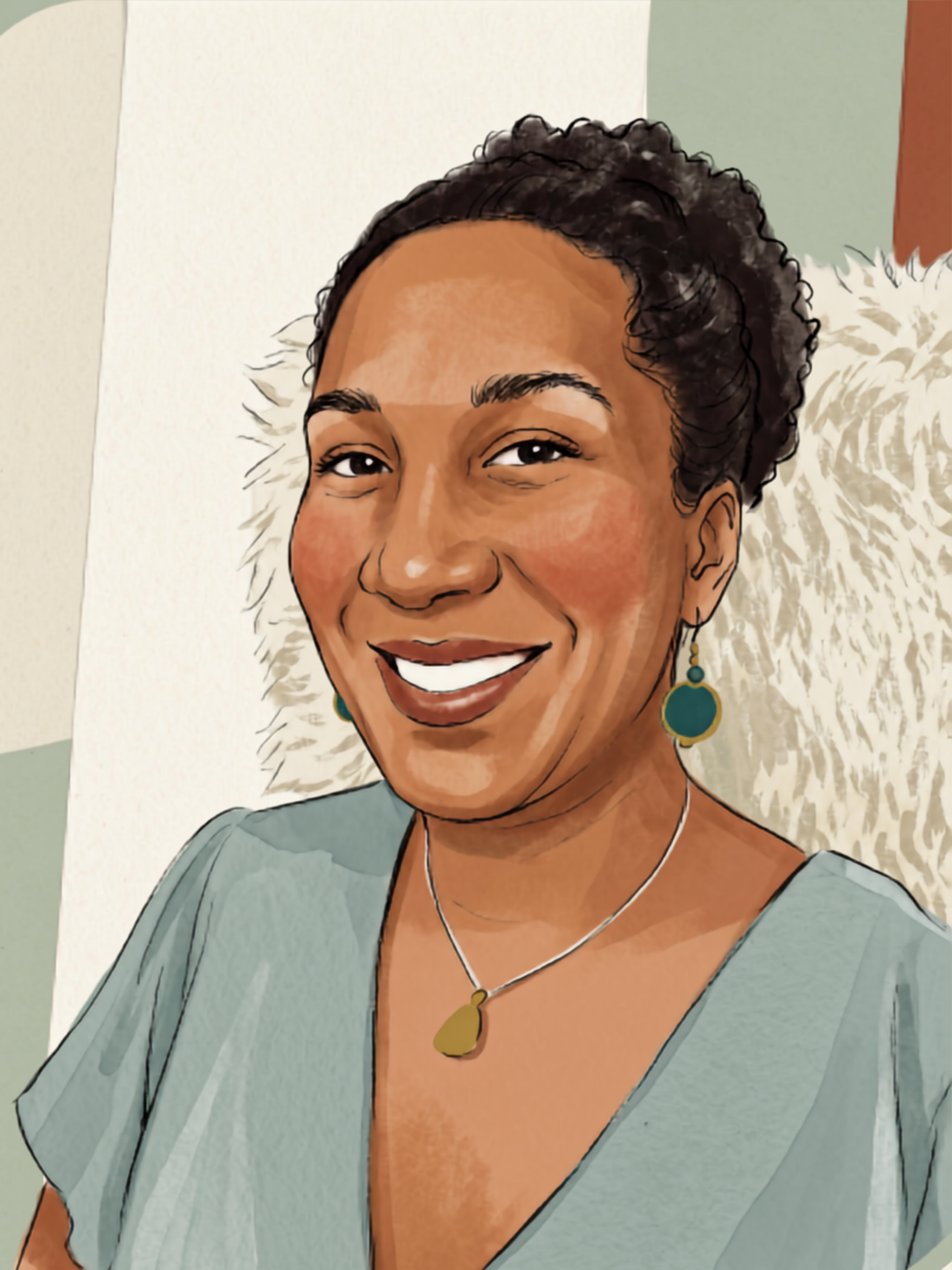
Hyacinth mensah-jones-maes
Cultural Wellbeing Architect & Educator

Akwaaba   ǀ   Ni Matavinaka mai  ǀ  Welkom  ǀ  Bem-vindo  ǀ  Bienvenue  ǀ  Karibu  ǀ  أهلًا وسهلً  ǀ  સ્વાગત છે  ǀ   خوش آمدی

Harmonising leadership, education and wellbeing in our schools and universities

This is a space where learning and leadership breathe differently. Here education breathes with care, belonging and renewal and flows with the rhythm of the seasons.

My work with schools, universities and communities in Belgium supports transformation from stigma, unconscious bias and colonial legacies to steadiness, clarity and connection.

Who I am

I’m a Belgium-based Cultural Wellbeing Architect and Educator shaped by London, West African, Caribbean and Indian cultures. I bridge inner steadiness and social change, pairing embodied practice with honest reckoning of Belgium’s colonial past and present. I support the first 1,000 days of childhood, helping families and early-years settings live de-colonial values.

Community-rooted and practice-based, my work keeps impact human, measurable and tender.

How I hold this work

This work touches living histories, nervous systems and family stories. It asks a lot of the people who step into it. Because of that, I pay attention not only to what we talk about, but to how we move through it together.

🌀 Healing-centred

I work with the emotional and bodily impact of racism, colonial legacies and stigma, not just the policies and theories around them. We move at a human pace, with room for discomfort, tenderness and rest.

🧘‍♀️ Embodied & practical

We use story, theatre, mindfulness, dialogue and simple body-based practices. At the same time, everything comes back to daily life: what this means for your classroom, your meetings, your emails, your next difficult conversation.

🌱 Community-rooted, research-informed

My practice is shaped by two decades of living and working in Belgian communities, alongside collaborations with organisations, researchers and students. I draw on research, but I don’t hide behind it.

🕯️ Honest, not performative

I don’t offer quick fixes or glossy diversity statements. If you want to tick a box, I’m not your person. If you want people to feel seen, steadier and better equipped, we can do meaningful work together.

Threads running Through My work

Careful Bridges to Belonging
Education that breathes—with decolonisation in practice and peace you can feel.

    • Recognition → Practice → Bridge-building. We name history and power, practice dignifying behaviours, then design bridges that hold.

    • Two tracks, one shared field.
      White-identifying groups: unlearning, accountability, daily repair.
      Black/PoC groups: rest, recognition, resourcing.
      We meet in carefully held moments of shared practice.

    • Methods that stay human. HONOUR (6 steps) and Volume You (10 steps); simple measures

    • First 1,000 Days strand. Peaceful, culturally attuned caregiving that turns decolonial values into daily care.

    • Healing-centred honesty: tenderness with the truth; no performance.

    • Dignity & consent: trauma-aware, culturally humble, boundaries with care.

    • Community care: access first (free LRC), sliding scale where needed.

    • Accountability over credentials: practice-based proof, not performative badges.

    • Seasonal pacing: humane rhythms that respect energy and real life.

  • I do this work because I know what it is to feel unseen inside institutions and to carry racialised stress in the body. As a woman of mixed cultures living in Belgium, I’ve witnessed how omissions—of African perspectives, of women’s biochemistry, of the sacred first 1,000 days—shape lives and learning.

    My why is to turn that absence into presence: careful, collaborative spaces where truth can be spoken and nervous systems can settle; where White-identifying groups practise accountability and repair, and Black people and People of Culture find rest, recognition and resourcing.

    I believe decolonisation lives in daily behaviour—how we teach, parent, lead and relate—so I pair embodied mindfulness with practical language for boundaries and repair, and I measure change gently.

    The aim is simple and brave: belonging as a habit, and a powerfully peaceful present we can actually feel.

my Strengths

Every school, university or community I work with has its own story. But the same threads keep appearing. These four strands are woven through everything I offer:

🌾 Emotional wellbeing & leadership for children and young people

Creating spaces where children and young people can name their feelings, trust their perceptions and practise leadership in age-appropriate ways. This can look like theatre-based camps, classroom sessions, or quiet one-to-one moments where a young person experiences themselves as capable and worthy of care.

🤝 Racial healing & education

Supporting staff, students, families and communities to recognise how racism, stigma and unconscious bias are shaping everyday life — and to respond without collapsing, attacking or turning away. We work with real scenarios, body responses and language, so people have something practical to reach for when harm or tension shows up.

🌕 Truth, reconciliation & cyclical wisdom

Honouring the wider cycles that shape our lives: seasons, bodies, grief, repair, attention and rest. This thread explores how colonial histories and current inequalities sit inside those cycles, and how education can become more truthful, humane and spacious without losing structure or rigour.

💎 Diamond clarity & resilience

Standing firm in the midst of resistance, avoidance and “this is how we’ve always done it.” This thread is about supporting educators, leaders, caregivers and young people to stay clear about what they’re seeing and what matters to them, while protecting their own nervous systems and capacity to care over time.

Current work & collaborations

This work is already happening in many small, steady ways across Belgium. A few of the collaborations that shape my practice:

⚓ Sankaa Vzw – Racism Unravelled & Safe Harbour

Facilitating spaces where people of African descent and allies can name and unpack experiences of racism, stigma and institutional harm, and explore what healing and repair might look like in daily life.

🤝 Diversity & Belonging in higher education

Co-designing and facilitating trainings for third- and fourth-year BA students in the care sector (hogescholen / universities), translating research on racism and colonial legacies into embodied, practical tools for future professionals.

🧸 Belonging in Early Years (kinderopvang)

Researching how belonging, emotional wellbeing and leadership opportunities are (or are not) nurtured for young children of African descent in day-care settings across Flanders, with a focus on the everyday practices of care.

🗣️ Community dialogues on colonial history

Contributing to initiatives such as Avansa Oost-Brabant’s “De Conversaties” in Leuven – moderated, multi-voiced spaces where people explore Belgium’s colonial past and its living traces using trauma-informed methods and deep listening.

🎭 Youth programmes & creative camps

Designing week-long summer camps and shorter programmes where young people work with theatre and the four elements — air, water, fire, earth — to build emotional intelligence, social awareness and life skills in a light, supportive setting.

These collaborations keep the work grounded: in bodies, in local realities, in communities who are already thinking and feeling deeply about these questions.

Experience Highlights

Pathways of working Together

These three pathways are how we turn recognition into practice—and practice into bridges that hold.

Consultation is where leadership work lives: honest context-setting, policy and curriculum advice, and practical plans that make change visible.

Adekyere (Academy) is the structured teaching home—courses, workshops and practice labs that build everyday skills, including a strand for the first 1,000 days so families and early-years settings can translate decolonial values into daily care.

Amansan (Community) is where learning grows in relationship—circles, storytelling and mutual care that deepen belonging across difference. Education threads through them all, with two tracks held safely when needed (unlearning and repair for White-identifying groups; rest, recognition and resourcing for Black people and People of Culture), and carefully facilitated moments that bring us together without forcing sameness. Start where you are; each pathway meets you with tenderness and clear next steps.

Choose the pathway that feels closest to where you are right now. All pathways can be tailored for schools, universities and community spaces.

  • Academy: Cultivating Embodied Learning

    Learning spaces for staff, students and caregivers.

    Explore decolonisation, stigma, unconscious bias and emotional leadership in a structured, supported way

    Short courses, live cohorts and practice incorporating:

    • Emotional Wellbeing for Teachers and Parents

    • Social and Emotional Learning for Young People

    • Decolonising The Classroom Curriculum

    • Professional Development for Educators and Care Professionals

  • Transforming Systems Through Awareness

    Tailored support for schools, universities and organisations. “From Stigma to Steady Classrooms” journeys to staff development, curriculum and policy reviews, and research partnerships grounded in your real context:

    • Racial awareness training for staff & leadership

    • Safe, facilitated dialogues on race & belonging

    • Leadership clinics: repair practices & decision-making

    • Policy/curriculum advisory for HEIs & care sector

    • Keynotes, panels, and moderations (EU)

  • Living with Practices of Care

    Spaces for youth, parents and wider communities. Community circles, youth programmes and parent gatherings that weave theatre, story, mindfulness and dialogue into everyday life, centring belonging and cultural wellbeing:

    • Healing from the Stigma of Race & Privilege: monthly circle of community practice

    • Dialogue & storytelling for repair

    • Family constellations for belonging

Let’s talk about your context

If you recognise some of these patterns in your school, university or community, we can begin with a conversation.

No big performance, no instant solutions – just time to name what is present, ask questions and sense whether we are a good fit to work together.

You might be:

  • a school leader or care coordinator who feels the limits of “business as usual”

  • a lecturer or researcher wanting to bring decolonial practice into your teaching or projects

  • a community organiser, youth worker or parent looking for steadier ways to hold these conversations

  • a non-native student looking for sanctuary or a listening circle - a soft place to land and air frustrations and gain strength

If you’d like to explore what support could look like in your context, you can:

Book a 30-minute call
Send me a message

When we reconcile with what has been left out, education becomes what it was always meant to be — a pathway home.
— Hyacinth / Ewura-Esi
Learn More