Audacity of presumed innocence
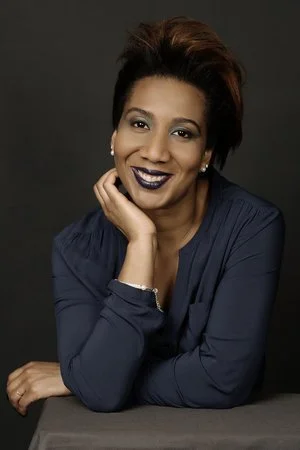
On Saturday I moderated Sankaa’s Voorbij Racisme gathering in Brussels. The afternoon brought together psychologists Ama Kissi, Birsen Taşpınar and Kemi Thompson with people from across the African diaspora and others engaged in anti-racism work.
We spoke about journeys. About what has shaped us. About what has helped us remain standing. And eventually, about what we might want to build.
The work of our three guests already held much of the terrain we were entering.
Kemi Thompson’s research brings questions of bicultural identity, belonging and mental wellbeing among young people into the conversation.
Birsen Taşpınar’s De pijn diep vanbinnen attends to what racism can leave within families and across generations.
Ama Kissi’s Witte zorg, Zwart leed asks what happens when the very systems intended to provide psychological care have not sufficiently examined racism within themselves.
Then we watched a fragment from VRT’s De Wonderjaren re-enacting the well-known doll experiment by Mamie and Kenneth Clark. In the Flemish version, young children were asked to attribute intelligence, goodness, beauty, leadership and other qualities to a Black doll or a white doll.
During and definitely after the viewing: The room changed.
Audacity parading as white innocence
I had seen the video before.
It was shown during my own training as a kinderbegeleider (Early Years Educator) in Flanders only a few years ago. On Saturday I learned that it continues to circulate as educational material.
What stayed with me afterwards was not simply the content of the children's answers. It was the audacity of continuing to require children to demonstrate something adults have had generations of evidence to understand.
Racism is not an undiscovered phenomenon. Neither are its effects upon children. So when does “we did not know” cease to be an explanation for funded and distributed media content?
And when does somebody else's ignorance begin creating work, distress and exposure for the people who are already living with what has supposedly not been understood?
Exploitation cloaked in innocence
I found the term emotional exploitation enter my thoughts following this inquiry.
There is indeed value in testimony, as the film brought to the surface. Values usually emerge from difficult conversations. There is even qualitative value in research that brings hidden realities into view. But when we share pain within a relationship that is intrinsically different from repeatedly turning pain into educational material.
So what we’re too often getting is: a child speaking. A camera recording. An audience learning. A teacher showing the recording to another classroom. Another conversation beginning. And somewhere inside that chain lurks a question that can disappear very easily:
Who is paying the price of everybody else's learning?
This happens to adults outside of the school or academic cycle. People living with racism can become extraordinarily practiced at explaining it. We tell the story. Provide the context. Correct the misunderstanding. Translate the experience. Supply another example. Recover. Return. Explain again.
There is an enormous amount of human energy inside that cycle. I am increasingly curious about what might happen if that energy started to come home.
Wellbeing rooted in reciprocity
There was another small moment during Saturday's gathering that has stayed in my mind as well as the film. As we moved towards more personal conversation, three white participants, who had joined the gathering professionally, offered to leave the room.
I heartily invited them to stay. Not simply to observe. But to participate. To speak personally. To allow some of their own vulnerability to meet us in the room. They did.
And their contributions mattered alongside everyone else's. For me, that offered another model of what learning together can look like. Nobody needed to become an exhibit. Nobody needed to disappear either.
People could enter the relationship. That is increasingly what I mean when I speak about being well together. It doesn’t require sameness. It doesn’t require unlimited access to one another. And it certainly doesn’t require those made to carry the greatest burden to continually provide the educational material.
Being well together asks something more reciprocal:
What am I bringing into this room?
What have I inherited?
What do I already assume?
What am I willing to examine in myself?
What knowledge is already present here?
And what becomes possible when we stop treating some people's lives primarily as lessons for somebody else?
Compassion that takes action
Near the end of Saturday's gathering we circled back to our opening about dreaming. Not dreaming as an escape but dreaming as a practice of asking what we actually want to create and coming into alignment with our intuition. Almost like inner compassion that acts and whose contribution is felt in the outer world.
The afternoon left me with questions that reach much further than one television programme.
Questions about education. About psychological wellbeing. About who is not asked enough to provide evidence of unlearning.
Questions about what racism is allowed to occupy inside our collective imagination. And about what might become possible when recognition, care and responsibility begin moving in more than one direction. I am still following those questions. For now, one of them feels particularly alive:
How much of our energy do we want to spend explaining the harm, and how much are we ready to invest in creating the conditions in which we can be well together?
It is after all the 2nd International Decade FOR the People of African Descent, let’s all ask ourselves that question. What’s next will reveal itself in a dream. Are we well enough to follow?